Your role as a representative of the hunting club for new members' first visit to the club is a great responsibility. Most important, when you hand out the contents of the new orientation pack to the members, you want to make sure that they immediately are filled with enough information so that they can make responsible decisions before you leave the premises. Ideally, you would like to hand out the newly designed orientation pack to them upon arrival at the club. The contents must be structured and written in a manner that allows for an easy understanding of the information provided.
Prioritize Immediate Concerns
Someone visiting the club for the first time like Alex will have lots of questions about first visits. The immediate concerns of someone new to the club will be how to get there, where to park, which gate will be open, who to inform of his arrival, and what action to take if his allocated hunting area is already occupied by someone else. These simple questions need to be immediately addressed in the introductory section of the material that is distributed to the new member.
First prioritize the basic information on your first visit. Do I park somewhere? At which gate do I enter the club? Who do I notify of my presence? Can I also change my assigned hunting area on short notice? All these questions and many more need to be answered immediately. Therefore basic information on your first visit needs to be prioritized in the contents of your orientation pack. In addition to this, also include a map indicating all sensitive areas, parking spaces and paths that must remain clear at all times.
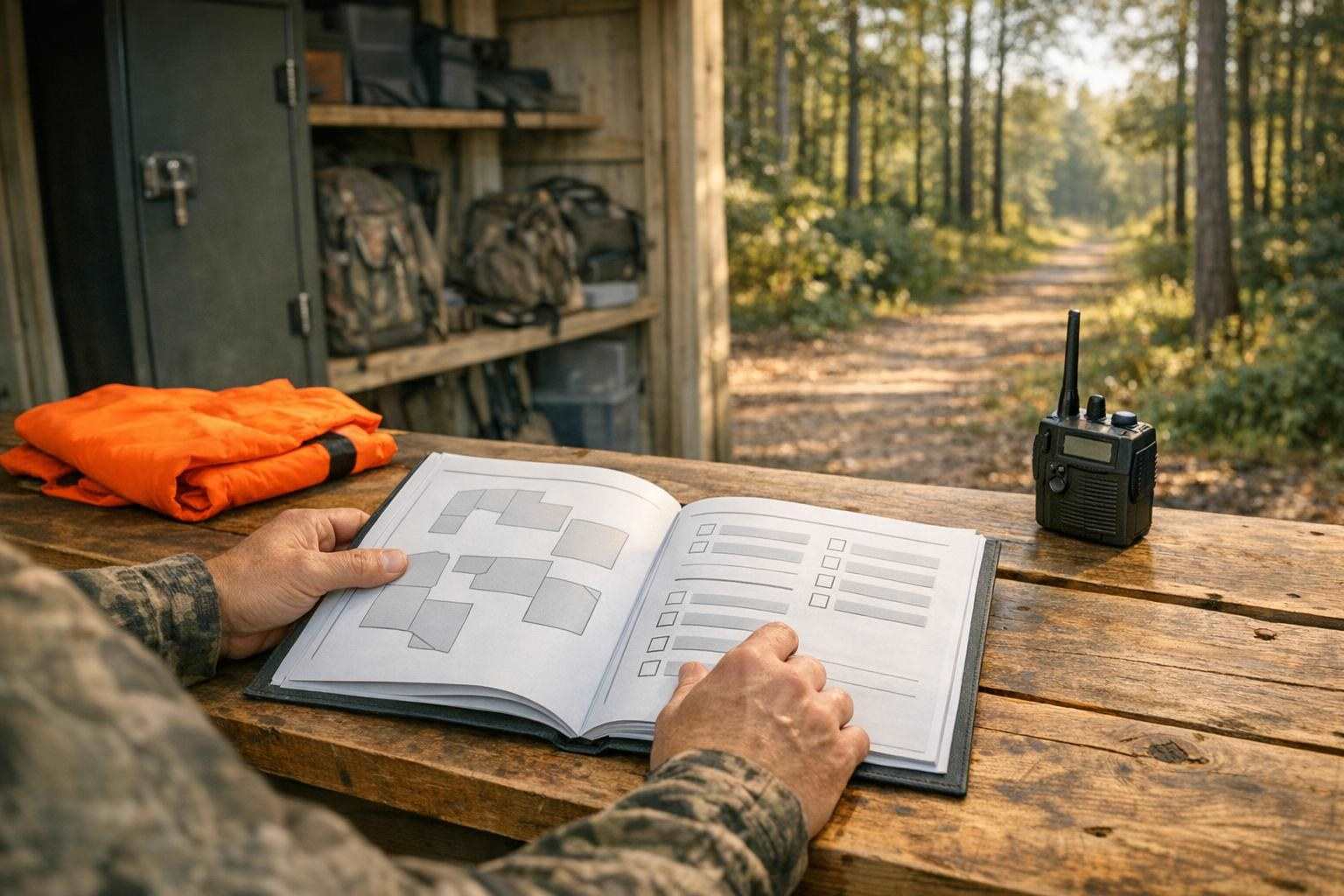
A pocket-sized document which newcomers can immediately refer to in respect of necessary aspects of joining the club is vital. Leaving them to have to investigate in respect of the above points could cause them considerable problems. Ensure they can immediately refer to information contained within the document and know when to update copies of the document that they have distributed to other people.
From Rules to Actionable Choices
Do turn the club's rules into the new member's actions and make sure that they are able to deal with the situations that may arise on the property. If for example a rule says respect property boundaries then you must explain what you would do if you encountered an unknown fence or a missing boundary marker. For example you may stop, stay on the club's paths and contact the club's member who is designated to deal with such situations.
Organize your orientation pack around the following questions that all prospective members will have answered prior to joining:
– What verification is required before accessing the property?
– Are there particular areas, dates, or activities that necessitate prior approval?
– What steps need to be taken to report issues such as a broken gate or safety hazard?
– What conduct is expected regarding livestock, neighbors, visitors and club members?
– What steps would Alex take if there was any uncertainty as circumstances changed?
Using a question-based format helps guide new members to make specific decisions and refer to the formal rules where appropriate. In this way, they have the most relevant information in the simplest format, to help them go hunting.
Safety Takes Precedence Over Convenience
The safest aspects of hunting should be the easiest to find. Avoid using ambiguous section headings and present information clearly. It is recommended that key topics are outlined in this section, including communication, identifying others before shooting, safe use of firearms, minimum visibility requirements, emergency contacts, first aid and what to do in high risk situations. The amount of information provided should reflect the specific circumstances of the club and its members.
For example instead of telling the new member of the club that on loss of sight of companion they must stop immediately and take time to locate that companion, advise them what to do on hearing an unusual sound whilst on hunting and what procedure to follow in the event of a near miss or an accident to the person or property and advise whom to report damage to property caused by another club member to.
This document is NOT a means to verify certain legal requirements, but rather to fulfill your club's obligations. It can be part of the member's induction process where any additional requirements (such as signatures, waiver forms etc.) can be verified.
Emphasize Environmental Stewardship
Support the expectation of members to respect habitat by clearly setting out ways and areas to safeguard water and nesting sites, how to drive in seasonal closed areas and in management zones, how to close gates behind themselves, what kinds of waste are to be taken and how to report erosion or other environmental problems including the spread of non-native species.
This increased member understanding of property boundaries also helps to explain closures for seasons and why management zones exist and are to be respected by the member.
A pragmatic approach by the club to limit 'temptation' and potential fouling by members is to be extremely reluctant to exempt members from agreed rules. In the rare circumstances where such a concession is granted, it should always be plainly stated that there are potential long-term environmental consequences which could arise from even apparently minor actions, and that in every doubt the member should always ask for advice.
Ensure Personal Connection and Support
Documents can only solve so many problems for a first time hunter. Having someone available to contact such as a hunter master or team leader for a short chat at the start is very valuable. Please note that the last page is set up to have new members confirm that they have read the formal club regulations as well as the club's arrival information. Also they confirm that they understand their legal responsibilities as club members.
The final page of the pack could request the member to sign a number of statements – for example, that they have read through all of the club's rules and regulations; that they have read through the information regarding arrival at the club's property for a hunt; and that they understand their legal obligations as a member of the club.
Ultimately the orientation pack needs to be revisited and updated after genuine use of it by all members, especially if a number of members have to seek clarification of the same aspect (e.g. parking or boundary limitations). The document becomes a framework of practical, responsible decisions, which also encourages environmental responsibility, and club members' mutual trust and respect.