A locked gate, two members assuming the same cover is available, or uncertainty about whether a prescribed burn changed a safe shooting direction can create wasted trips and safety risks. These problems usually begin during planning, not in the field. A short club meeting and written access plan can protect habitat, clarify responsibilities and give members a consistent standard for participation.
Start with the trouble spots, not the calendar
Before setting dates, ask what caused confusion last season. It may have been an unmarked gate, an outdated phone number or a member who did not know that a food plot was being rested. List these issues without assigning blame. The goal is to identify weak points while they are easy to fix.
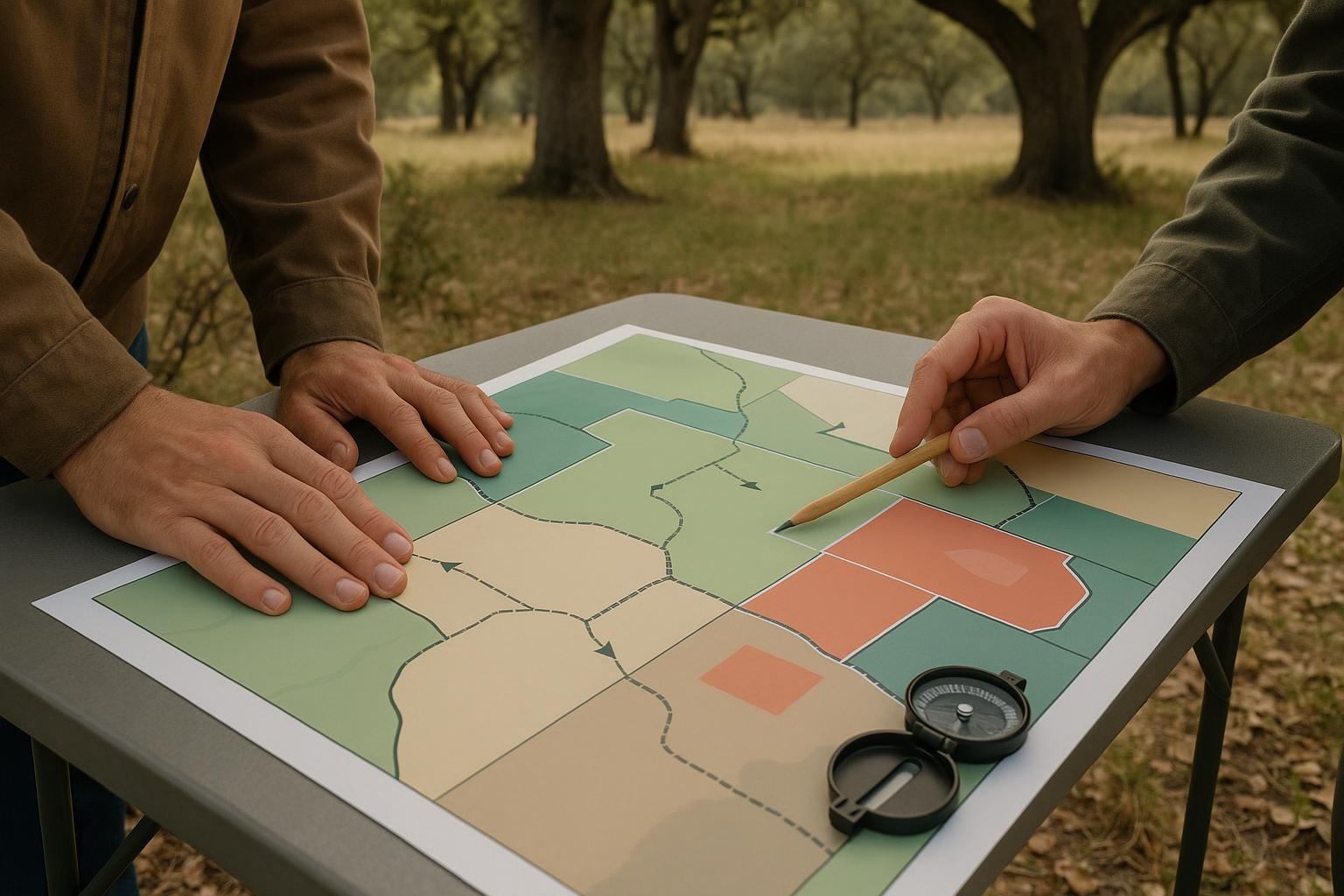
Divide the property into practical management units rather than treating it as one uninterrupted hunting area. Note field edges, thick cover, water, parking areas, livestock crossings, equipment lanes and places where people may converge. A simple map should show areas that are open, restricted, temporarily closed or suitable only for certain types of access.
The map needs a clear date, a person responsible for updates and a defined place where members can find the current version. For a paper copy, use the agreed meeting place or vehicle. For a digital version, identify the authoritative copy.
Separate permanent conditions from temporary ones. A property boundary or established parking area may not change, while a wet access lane, active farm operation or newly treated habitat area may require a short-term restriction. Give temporary closures an expiration date or review point so members can tell whether they remain active without relying on hearsay.
Make access rules specific enough to use
"Respect the property" is necessary but insufficient. Members should know where to park, which gates must remain closed, whether guests need approval, how to report damage and which routes are off limits after heavy rain or habitat work. If access depends on a landowner, tenant or caretaker, identify the approved way to request permission instead of leaving members to make separate assumptions.
Clarify how members reserve or announce use of an area. A shared calendar, notice board or group message can work if everyone knows what counts as a confirmed booking and how conflicts are resolved. Record the date, general area, member name and relevant restriction without collecting unnecessary personal detail. Establish a fair process for duplicate requests before a disagreement occurs.
Include non-hunting visits. Scouting, dog training, habitat work, photography and equipment retrieval can affect another member's plans. Separate these activities on the calendar when appropriate. Decide whether members may bring guests, how guests receive the rules and who is responsible for explaining them.
Put safety decisions on the map
A property map should help members recognize safety concerns before they unload a vehicle or leave the parking area. Identify roads, homes, public paths, livestock areas, work zones and other locations requiring extra caution. Do not assume a familiar field has the same safe shooting directions every season. Fences may move, vegetation may be cleared, equipment may be parked elsewhere and habitat work may alter visibility.
Discuss safe shooting directions, stand or position expectations, movement between areas and what to do when encountering another person. These discussions do not replace individual judgment; they establish a shared baseline so silence is less likely to be interpreted as permission. Anyone uncertain about a boundary, direction or closed area should stop and confirm it.
Keep legal and safety guidance current. Hunting seasons, licensing requirements, permitted methods, access permissions and local restrictions may change. Before hunting, members should consult the relevant official wildlife agency, landowner instructions and current regulations. Club notes can direct members to those sources but are not a substitute for official guidance. Safe firearm handling, target identification and compliance with applicable rules remain individual responsibilities.
Match hunting plans with habitat work
Treat management work as part of the season schedule, not an inconvenience between hunts. Resting a field, protecting nesting or brood-rearing cover, limiting vehicle traffic and scheduling maintenance can affect where members go and when. Explain the reason for a restriction in plain language, even if the map uses only a short label. Members are more likely to follow a closure when they understand what it protects and when it will be reviewed.
Create a communication path between the person coordinating habitat work and the person managing member access. Record changes on the current map and send them through the agreed channel. For urgent updates, such as a blocked route or unexpected work activity, use a direct notice as well as the normal record. Add the change to the permanent notes if it is likely to matter again.
Do not promise that habitat work will produce a particular hunting result. Weather, conditions and wildlife use can vary, and responsible management cannot guarantee a specific encounter. The practical goals are to protect the property, apply decisions consistently and give members accurate information about what is available.
Assign responsibility and revisit the plan
A plan tends to fail when every task belongs vaguely to "the club." Assign responsibility for the map, access questions, safety updates, habitat notices and incident reporting. Roles may be shared or rotated, but members should know whom to contact and what information to provide. Reports should describe the location, date, condition and immediate concern without turning routine problem-solving into a personal dispute.
Schedule a brief review before the season and another after the first meaningful period of use. Ask which instructions were unclear, which routes caused congestion and whether a restriction was ignored because it was difficult to find. Update the plan when facts change, not merely when a meeting is scheduled.
The most useful club plan is not the longest. It is the one members can find, understand and apply when conditions differ from what they expected. Clear access information, visible safety decisions, coordinated habitat work and assigned follow-through give the season a stronger foundation before anyone heads into the field.